Mining Hoses South Africa: Specification Checklist
South African mining hose order checklist covering slurry or water duty, diameter, pressure, suction, abrasion, route, couplings and spare lengths.
A message that says “4-inch mining hose, 50 metres” is not enough for our factory to confirm a hose. We can quote a diameter and length, but those two numbers do not tell us whether the line will carry clean water, abrasive slurry or suction duty. They also do not tell us the pump pressure, solids, route or connection.
At Shandong Machen Machinery Equipment Co., Ltd., we match hose with the sand or slurry pump package. Before we prepare a South African order, we separate the hose positions, check the actual mine route and confirm the couplings. This prevents a common problem: the pump reaches the site, but the hose cannot handle the material or connect to the installed equipment.
Start with the Hose Position in the Pumping System
The first question on our quotation sheet is not colour or wall thickness. It is where the hose will work. One mine can need three different hose duties in the same project.
| Position | Typical medium | Our starting choice | Main check |
|---|---|---|---|
| Water supply or wash-water line | Clean water or water with very little fine solid | PVC flat water hose | Working pressure, route and connection |
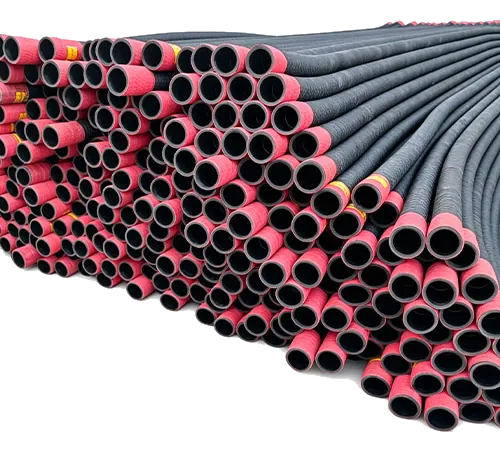
| Pump discharge line | Sand, tailings or abrasive mineral slurry | Wear-resistant rubber mining hose | Pressure, liner wear, solids and section length |
| Pump suction line | Water or slurry before the pump | Suction-rated construction selected separately | Vacuum resistance, air tightness and bend layout |
We do not treat these hoses as interchangeable. A flexible lay-flat hose that works well for clean water is not our default choice for abrasive slurry. A discharge hose is also not automatically suitable for suction. Negative pressure can flatten a hose that was built only to hold internal pressure.
1. Tell Us What Will Pass Through the Hose
“Mining water” can mean clean make-up water, muddy pit water or a dense sand mixture. We ask the buyer to name the medium and describe the solids. For slurry, useful information includes the normal concentration, largest particle, particle shape and whether the material contains sharp gravel.
This information changes the liner and the expected wear point. A hose carrying rounded river sand at moderate concentration does not wear in the same way as a line carrying angular crushed mineral. If laboratory data are unavailable, we can work from site photographs, a short video and a sample beside a ruler, provided the quotation clearly records the assumptions.
2. Confirm the Inside Diameter, Not Only the Pump Outlet
Buyers often order hose by the cast number on a pump flange. We still confirm the actual inside diameter and the complete connection. The pump outlet, adapter, hose bore and field pipeline must form one usable route.
A smaller bore can increase velocity and friction loss. A much larger bore can reduce slurry velocity enough for solids to settle, especially during low-flow operation. We review the diameter with the expected flow and route rather than enlarging it automatically.
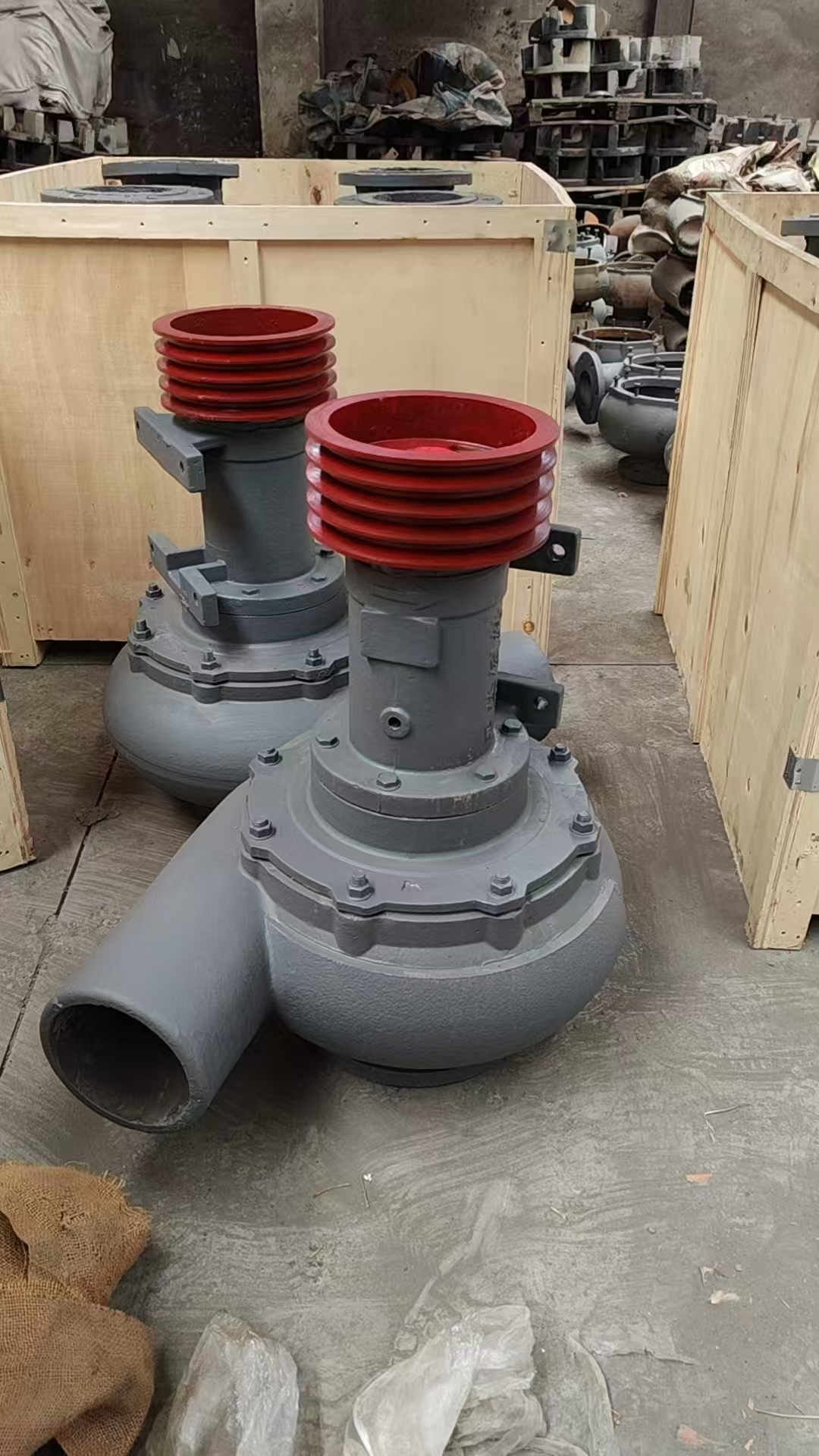
For a Machen package, we match the hose to the confirmed WSA horizontal slurry pump or LSA vertical sand pump. When the hose connects to another supplier’s pump, we ask for flange photos, measured diameter, bolt-hole quantity and centre distance.
3. Give Working Pressure and the Real Route
Motor power is not a hose pressure specification. The line pressure depends on the pump operating point, elevation, friction, valves, bends and what happens when flow changes. We ask for the vertical lift, horizontal distance, hose diameter and major fittings.
The selected hose needs a working-pressure rating suitable for normal operation and the credible pressure changes in that system. A route that climbs from a pit and then runs several hundred metres across a mine is different from a short wash-water line beside the plant.
We do not invent a pressure value when the route is unknown. For a complete pump-and-hose quotation, our engineering check starts with flow and total head. For a replacement hose, the buyer should provide the pump model, operating pressure if available and details of any previous burst or coupling failure.
4. State Clearly Whether Any Section Works under Suction
Suction service needs its own confirmation. The hose must resist vacuum without collapsing, remain air-tight and bend without restricting the inlet. A soft kink or small air leak can reduce pump performance before the discharge hose shows any problem.
For a horizontal pump, send the suction lift, suction length, hose diameter, number of bends and lowest liquid level. Keep the route as short and direct as the site allows. If the pump is too high above the material, changing the installation may be better than asking a hose to solve the whole suction problem.
Our South Africa slurry pump selection guide explains the pump-side information we check with this hose specification.
5. Match the Liner to Abrasion, Not to the Word “Mining”
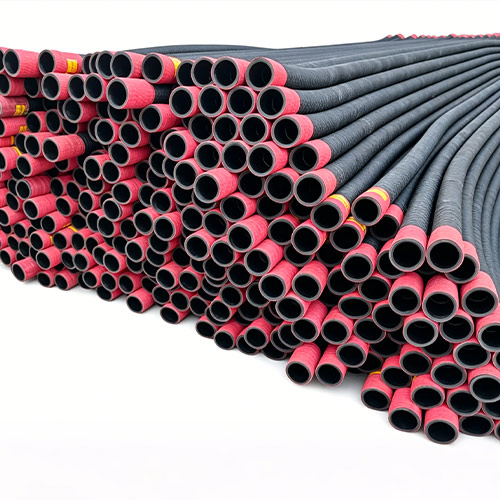
For sand and mineral slurry discharge, we normally start with a wear-resistant rubber hose. The liner is the working surface, so the enquiry must describe what will touch it. We also look at bends because wear can concentrate where the flow changes direction.
Our wear-resistant rubber mining hose is supplied as part of pump packages or as an OEM hose order. We confirm the bore, length, route, pressure and end connection before production. We do not state a universal service life because pump speed, slurry concentration, particle hardness and bend layout can change wear substantially.
For maintenance planning, mark the sections nearest the pump and the sharpest bends. Those are sensible places to inspect first. Rotating or replacing a high-wear section on a planned shutdown costs less than waiting for leakage in production.
6. Use PVC Flat Hose Only for Suitable Water Duty
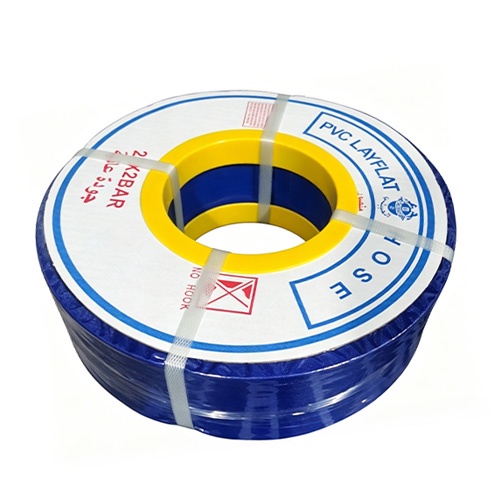
PVC flat hose is useful when a South African site needs a movable line for clean or low-abrasion water. It packs into a smaller volume than rigid pipe and can be practical for temporary water supply, washing or dewatering routes where the medium and pressure are suitable.
Machen currently supplies PVC-coated flat water hose in 1-8 inch sizes. The diameter range does not mean every size is suitable for every pump. We still match the working pressure, distance and connection. We do not recommend this construction as a default abrasive slurry discharge hose.
7. Set Section Lengths from Handling and Shipping Conditions
A single long hose may reduce the number of joints, but it can be difficult to move, inspect or replace at a remote mine. Short sections add connections but make a damaged length easier to isolate. We decide the section length with the buyer instead of dividing the total distance by habit.
For South African orders, we ask how the hose will be unloaded, moved around the site and stored. We also need to know whether the shipment will go to a port, a Johannesburg warehouse or directly to an inland project. Packing and section length should suit the transport and the crew that will handle the hose after arrival.
A practical order list shows each duty separately: for example, discharge hose in named sections, one replacement section, water hose in rolls and the exact quantity of couplings or flange pieces.
8. Check Bend Radius and Protect the Route
A hose is flexible, but it should not be forced into a sharp bend at the pump outlet or coupling. Kinking reduces the flow area and can concentrate stress. Abrasive slurry also wears faster at poorly supported bends where the hose moves or rubs against the ground.
Send a simple route drawing with the pump, bends, road crossings and discharge point marked. We use it to discuss section lengths and where rigid support or a protective crossing may be needed. At the site, keep the hose away from sharp metal edges and inspect supports after the line is pressurised.
9. Specify Every Coupling and Flange
“Standard flange” causes avoidable mistakes in export orders. Our quotation records the connection type, outside diameter, bolt-hole quantity, hole diameter, pitch circle and material where relevant. A photograph with a tape measure helps, but a dimensioned drawing is better for a replacement connection.
We also confirm whether the buyer needs loose flanges, fixed flanges, clamps, gaskets, reducers or adapters. The hose invoice may be correct while the system is unusable if one transition piece is missing. For a Machen pump package, we prepare the pump outlet and hose ends as one connection list.
10. Record Temperature and Liquid Chemistry
Ambient mine conditions are not the only temperature that matters. The buyer should state the liquid temperature and identify oil, acid, process chemicals or unusual salinity. Rubber and PVC compounds do not have the same compatibility with every liquid.
If the application is not ordinary water or mineral slurry, we require the liquid description before confirming the hose. A material name or safety data sheet is more useful than the phrase “chemical water”.
11. Plan Inspection and Spare Lengths with the First Order
Remote projects can wait much longer for one replacement section than for a planned production stop. We recommend identifying the most critical hose duty and deciding whether the first shipment should include a spare length, spare gasket set and one extra connection piece.
When the hose enters service, record the installation date and inspect for soft spots, exposed reinforcement, cracks, leakage, coupling movement and local wear. The safest inspection interval depends on the duty and the site’s operating rules. A new abrasive line should be checked more frequently until the mine understands its wear pattern.
12. Put the Specification on the Purchase Order
A useful purchase description contains more than a product name. It should state the hose duty, medium, inside diameter, section length and quantity, working pressure, suction requirement if any, connection drawing and any required marking.
ISO 28017:2026 provides recognised terminology and test references for wire- or textile-reinforced dredging hoses used with water and abrasive mixtures. It points buyers and manufacturers to hydrostatic, abrasion, vacuum and flexibility test methods. We use those subjects as a useful specification checklist; a reference to the standard in this guide is not a claim that every Machen hose is certified to ISO 28017. Any required standard or third-party certificate must be written into the enquiry and confirmed before order.
The Information Our Factory Needs for a Firm Hose Quote
- Hose position: suction, slurry discharge, dewatering or clean-water supply.
- Medium, solids concentration, largest particle and material photographs.
- Required inside diameter and the pump model or outlet dimensions.
- Flow, total lift, horizontal distance, bends and any known working pressure.
- Total length, preferred section length and quantity of spare sections.
- Connection type with a drawing or complete flange measurements.
- Liquid temperature and any oil, acid, salt or process chemical present.
- Destination city, delivery point or port in South Africa.
Send those details through our project enquiry page. We will separate the hose duties, mark any missing data and quote the hose with the required adapters and pump package scope.
Questions South African Mining Buyers Ask Us
Can one hose be used for both clean water and slurry?
We specify them separately. Clean-water PVC hose and abrasion-resistant rubber slurry hose have different construction and cost. Using one general hose description usually hides the real duty.
Can you quote from the pump outlet size?
We can prepare a preliminary option, but we need the route, medium, pressure or pump duty and connection details before confirming production.
Do you supply only hose, without a Machen pump?
Yes. For a hose-only order, send the installed pump and flange information. For a new package, our mining hose and water pipe range can be matched with the pump, drive and adapters.
How much spare hose should a remote mine buy?
There is no fixed percentage for every site. We start with the highest-wear or most critical section, then consider operating hours, route damage risk and replacement lead time.
Our Factory Position
Shandong Machen Machinery Equipment Co., Ltd. does not sell a hose colour as a mining solution. We match the line to the pump duty and make the connection list visible before production. For South African mine owners, contractors and equipment dealers, that work is more useful than a catalogue description that leaves suction, pressure and flange details unresolved.
Review our Africa pump package supply scope and send the site route with your hose enquiry. We will quote the water, slurry and suction duties as separate items where the project requires them.